Architecture
The mansions of the oil barons: eclecticism, neo-Gothic and Baroque in stone.
The facades of the oil boom
The chief wealth of Torgovaya is its buildings. In the late 19th and early 20th centuries oil millionaires built lavish apartment houses and mansions here, each striving to outdo his neighbour. So an open-air museum appeared on the street: eclecticism, neo-Gothic, Baroque and neoclassicism in pale limestone.
Buildings and their stories
Naghiyev's house
A lavish apartment house built for Musa Naghiyev, one of Baku's richest oil industrialists, to a design by the architect Józef Plośko.
The Rothschilds' house
One of the oldest buildings on the street, from the late 19th century, linked to the office of the Rothschild brothers — a symbol of the age of oil capital.
Landau's birthplace
In one of the houses on this street was born Lev Landau — a Nobel laureate, one of the greatest physicists of the 20th century, a son of Baku.
The Opera theatre
The building of the Azerbaijan Opera and Ballet Theatre of the early 20th century — a model of the grand theatre architecture of the time.
The Behbudov theatre
The Rashid Behbudov State Song Theatre, housed in a historic building from the early last century.
The Armenian church
An old church beside the street, by Fountains Square — part of the many-faced historic centre of Baku.
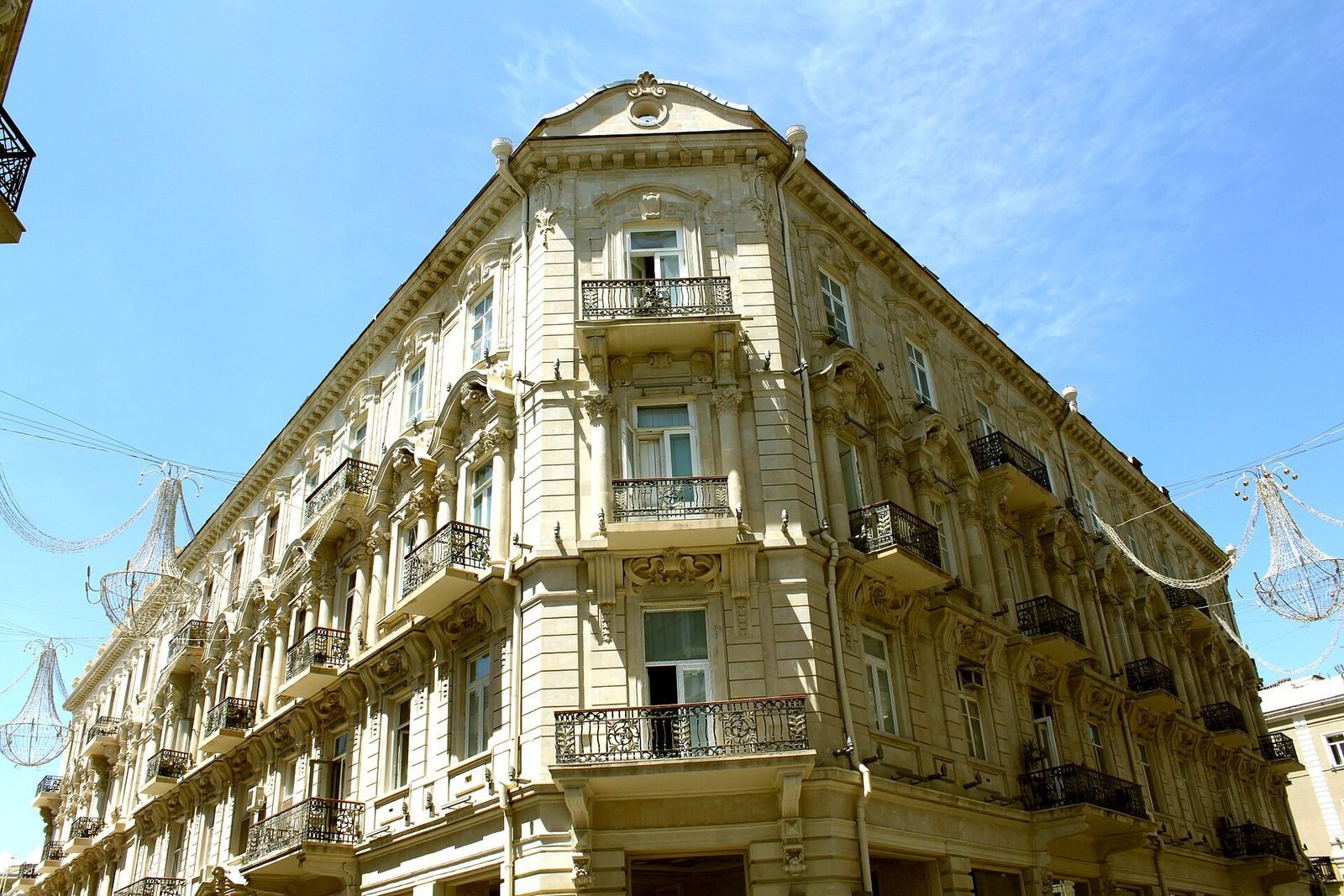
Barons and architects
Behind the facades of Torgovaya stand the names of the oil magnates — Musa Naghiyev, Shamsi Asadullayev, Murtuza Mukhtarov — and of architects, among them Józef Plośko and von der Nonne. Their taste and ambition created the ornate, eclectic look for which the street is famous to this day.
Every house on Torgovaya is the history of an oil family frozen in stone.